Big Democrat Projects on Hold in Springfield
It’s Sunday, May 31, the final day of regular session for the Illinois General Assembly.
In years past, this deadline carried more significance because legislation with an immediate effective date could pass with a simple majority only through May 31—30 votes in the Senate and 60 in the House. After today, bills taking effect immediately require a three-fifths supermajority: 36 votes in the Senate and 71 in the House.
Today, however, Democrats hold large supermajorities in both chambers and can pass legislation without Republican support. That makes the calendar deadline far less meaningful for policy legislation than it once was.
Still, failure to pass a budget today would signal dysfunction between the Governor’s Office and legislative leadership. For that reason, it is nearly certain a budget will pass—even if negotiations stretch into the early hours of June 1. Passing a budget remains one of the legislature’s most basic responsibilities
Earlier this month, Senate President Don Harmon and Speaker of the House Emanuel “Chris” Welch made a big announcement that “more than 90 pieces of budget legislation will be consolidated and introduced as House Bill 131 and Senate Bill 2512”… to “ensure that all interested parties have time to review and offer thoughtful feedback.”
Then, late Friday night, leadership filed the actual budget language in Senate Amendment 1 to House Bill 111: a 3,551-page spending plan—longer than last year’s version.
While much of the language will resemble prior budgets, bills of this size inevitably contain provisions that receive little public scrutiny.
Adding to public frustration, the Chicago Tribune reports legislators are set to receive another 3.2% pay increase, bringing annual salaries to $101,450. In 2018, legislator pay stood at $67,836—an increase of roughly 50% during Governor Pritzker’s tenure. Per diem payments, mileage reimbursement, and office allotments have also increased over time, while lawmakers continue to receive pension and healthcare benefits.
This year’s general revenue budget, reportedly near $55 billion, appears somewhat smaller than Governor Pritzker’s originally proposed budget of more than $56 billion. Even so, lawmakers continue searching for additional revenue sources.
According to reports, tax discussions have included:]
• a per-user tax on large social media companies;
• redirecting sales tax revenue from candy, soft drinks, and grooming products away from infrastructure and toward operating expenses;
• extending limits on corporate operating-loss deductions
• proposals involving digital advertising taxes and online prediction markets.
Whatever final budget emerges, critics argue Illinois will again fall short of a truly balanced budget because the state continues underfunding pension obligations by billions annually.
We’ll provide a more detailed breakdown of the spending plan in the coming weeks. Governor Pritzker’s original proposal still included hundreds of millions directed toward politically connected nonprofits, more than $4.4 billion for daycare spending, $178 million for park districts, and millions more to chambers of commerce and local organizations.
UNFINISHED BUSINESS
As important as the budget is, some of the legislature’s biggest policy priorities remain unresolved.
BUILD Proposal Faces Major Resistance
Governor Pritzker’s BUILD proposal—which critics argue would override local zoning authority—appears stalled after bipartisan opposition from mayors, municipal officials, and residents across Illinois.
This was as stupid as his “Amazon and Uber Eats” tax he wanted last fall. Of course, never say never when it comes to something Pritzker wants. A narrower version may still emerge, particularly around Accessory Dwelling Units (ADUs) in Cook County.
Bears Megaproject Appears Stalled—for Now
Momentum for the Bears stadium megaproject also appears to have stalled. Reports suggest negotiations increasingly center on keeping the Bears in Chicago rather than supporting a broader suburban stadium plan. Sports Mockery reported that Democratic Senate negotiator Bill Cunningham stepped out of a two-hour meeting and indicated that:
1. The Megaproject bill doesn’t have enough votes in the Senate.
2. Chicago legislators want the Bears in Chicago, and they want a bill that gives them what they want so that Chicago can compete for a stadium.
3. That the Bears have always been interested in staying in Chicago. Senator Cunningham reportedly said that the team never fully gave up on finding a place in downtown Chicago for a new stadium.
Whether this is a negotiating tactic or a true policy shift remains unclear.
The POWER Act and Data Center Pushback
The POWER Act, legislation aimed at regulating data center development, also appears stalled.
Across Illinois, residents have pushed back against proposed data center developments over energy use, land use, noise, and zoning concerns. Legislators appear reluctant to override local authority on an issue increasingly dominated by local politics.
Governor Pritzker had previously proposed a two-year moratorium on certain data center tax incentives after promoting Illinois as a national hub for development in the sector. Expect this issue to return during the fall veto session.
Lesser-Noticed Bills Moving Forward
Meanwhile, lesser-noted bills passed both houses, including the following two, which I highlighted during the Facebook Live and YouTube discussion on Thursday
SB 3341 – Birth Control – Minors Consent: This bill literally lets minors consent to getting birth control with NO parental involvement. It also says that “a minor is deemed to have the same legal capacity to act and has the same powers and obligations as a person of legal age.”
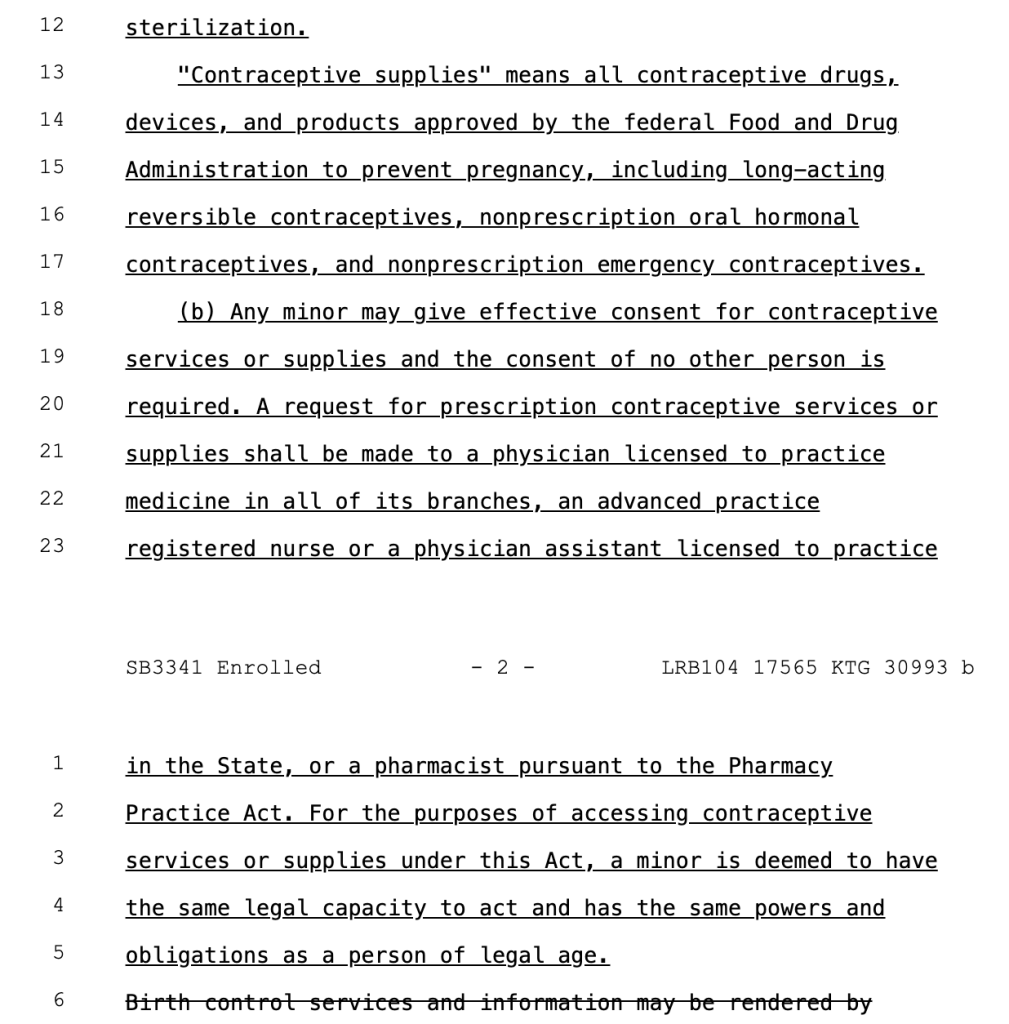
So, minors are literally considered of legal age. It doesn’t get much more radical than that. This is unbelievable. If you didn’t think they could destroy parental rights anymore in Illinois, you were wrong. They are redefining terms in ways never thought of.
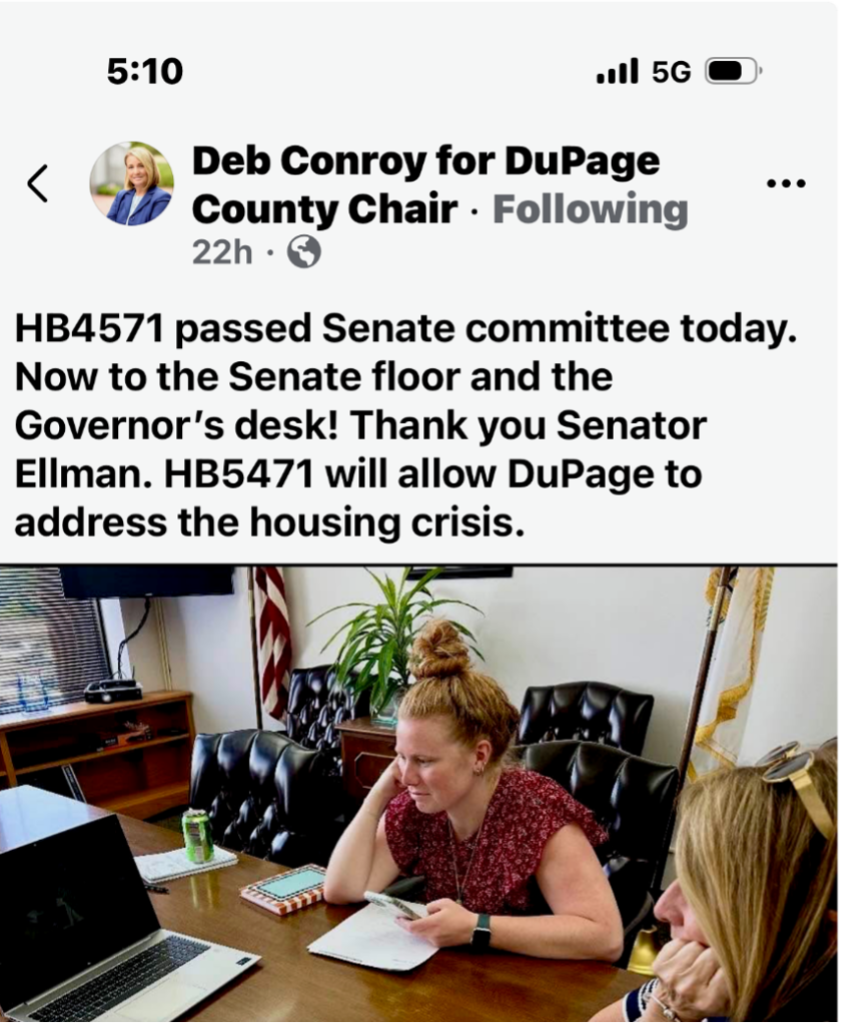
HB4571 – County Affordable Housing. This bill allows counties with populations between 650,000 and 2 million to create affordable housing for persons earning up to 140% of the median income annually. The county is allowed to transfer property, buy property, develop property, offer grants and loans to have housing built, and then transfer that property to people making up to $120,000 in DuPage County. Median household income is $112,000 in DuPage. For a person, it’s around $80,000, so if they use household income, that means a family making $156,000 could be furnished with taxpayer-funded housing.
DuPage County Chairwoman, Deb Conroy, is very excited about this, according to her social media post:
Jeanne’s X The Democrat budget dropped last night around 9 pm. It just went through a House Committee hearing, and it isn’t finished. More Amendments are coming with only 10 hours left in regular session. But the Dems with their supermajorities in both chambers don’t need any Republican support, and so they will pass it only when all of their special interest friends are happy.
Here’s what’s in it, according to House testimony:
-Revenue=$55.95B
-Spending =$55.88B
-New Taxes on:
–Deleting some NOL deductions
–Predictive Markets Tax
–Fantasy Sports Tax
–Crypto Tax
–Some type of social media tax
–And other taxes
-Pause in the 1.3 cent gas tax increase
-New bonds for capital projects
-3.2% increase in salary for part-time legislators who will have a base pay of $101,450
-No new money for the rainy day fund! Funding this is something Pritzker has previously bragged about.
– Still expecting Omnibus Legislation on Medicaid program
– The Revenue bill is not finished yet.
The Democrats have had 5 months to get this done and have it open for people to weigh in, but they prefer total control and operating behind closed doors.